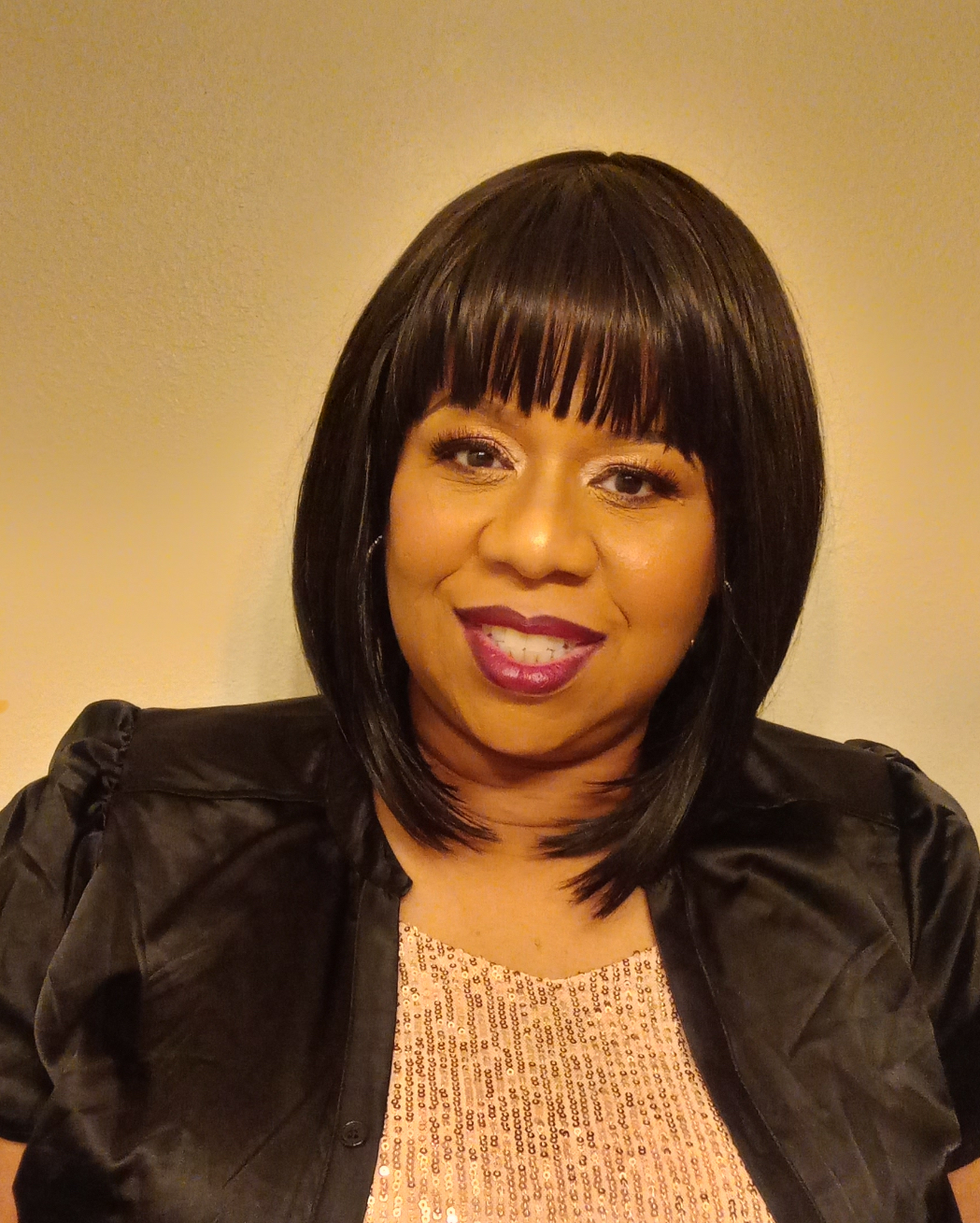
Ashana Bigard
Executive Director, Amplify Justice / Liberation Collective · Fifth-generation New Orleans native · Author · Advocate · Trainer
Section 05
For Black girls, preteens, adolescents, and young women — and the families who love them. We are not a problem to be managed. We are not a category to be assigned. We are original.
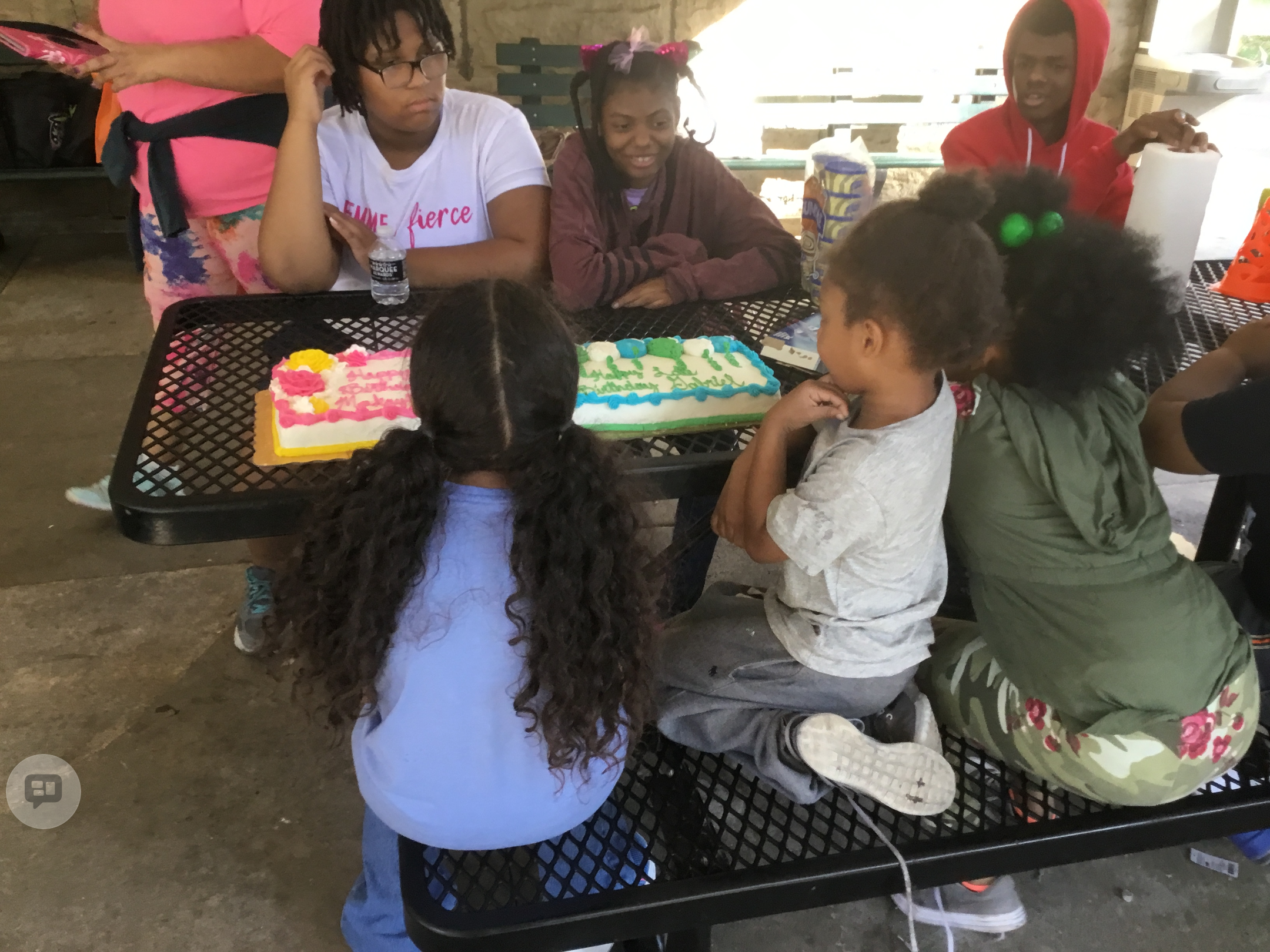
Black girls in community — this is what joy, safety, and belonging look like
Beginning in the 1990s and continuing into the 2000s, Depo-Provera — a hormonal birth control injection — was heavily promoted in clinics and schools serving Black girls and young women. Girls were going in and getting the shot without receiving the side effect sheet. Without being told what might happen to their mood, their emotions, their sense of themselves.
What was happening to them was real. What was being done with that reality was criminal. Instead of connecting the dots between the medication and the behavior, systems were connecting those girls to juvenile facilities.
Between 1967 and 1983, the FDA rejected Depo-Provera due to links to cancer in lab animals. During that period it was still used on thousands of women without informed consent — disproportionately low-income Black women. When it finally received FDA approval in 1992, it was over the formal objection of the National Black Women's Health Project.
Clinical studies of adolescents ages 12–20 using Depo-Provera found mood changes in 31% of users and depression in 26% — more than one in four girls. The injection suppresses hormones that regulate serotonin. The result can be irritability, aggression, severe mood swings, and depression that looks from the outside like a behavior problem.
Depo-Provera was tested on Black women across the diaspora without warning them of potential risks. Today, a disproportionately high percentage of its users are low-income Black women and girls — reflecting the continued legacy of reproductive coercion where a full range of options and truly informed consent are routinely withheld.
Black girls are seven times more likely to be suspended than white female students, three times more likely to be restrained, and four times more likely to be arrested at school. The same decade that Depo-Provera was being pushed on Black girls without informed consent was the same decade their presence in juvenile facilities was rising sharply.
"They were being arrested for symptoms
of a medication nobody told them they were taking."
Before colonization arrived on these shores, the majority of the Indigenous nations of what we now call America were matriarchal. Women were chiefs. Women were governors. Women chose when and if the tribe went to war. Women held the land. Women were the center of the economy, the spirituality, the governance, and the survival of their people.
This is not mythology. This is documented history that was deliberately buried.
Because one of the first things colonization did — one of its most calculated moves — was to redefine womanhood. To dismantle the matriarchy. To take women who held power and reclassify them as property. To take cultures where female strength was governance and replace it with a European model where female strength was a problem to be managed.
They did not just steal the land. They stole womanhood itself.
When they call Serena Williams masculine, they are completing that original colonial project. When they call Michelle Obama a man, they are completing that project. Every Black woman who has ever been told she is too strong, too loud, too much, not feminine enough — that is the colonizer's voice. It was always the colonizer's voice. It was never the truth.
So here is what we need to sit with. When we tell a little Black girl — a girl who is strong, athletic, unbothered by pink, uninterested in performing what white supremacy calls feminine — when we tell that child that maybe she is non-binary, that maybe she needs a different category, that maybe she is not quite a girl — we are not protecting her.
We are completing the colonizer's work for them.
The framework that says if you don't fit the white patriarchal performance of femininity, you must exit the category of woman entirely — that framework leaves the white patriarchal definition of womanhood standing completely untouched. It doesn't challenge it. It doesn't dismantle it. It accepts it, and then offers an exit door to everyone who doesn't fit.
That is not liberation. That is the same colonial eviction with a progressive coat of paint.
The women who came before us — our grandmothers, our great-grandmothers, the matriarchs who governed nations on this land — they were not confused about what they were. They did not need a new category. They needed the colonizer to get out of the way of the category they already held.
The revolutionary act is not to leave womanhood. It is to blow the walls off the definition until it is wide enough to hold every one of us — every body, every strength, every cultural expression of what it has always meant, across thousands of years, to be a woman on this land.
We don't need to be redefined.
We need to be remembered.
Black women have always set the standard that the rest of the world copies without credit. The fashion, the music, the beauty standards, the cultural expressions that drive billions of dollars in global industry — all of it flows from us. Whether a Black girl is rocking a shaved head, wearing oversized clothes, moving through the world unbothered by what anyone expects femininity to look like — she is not confused. She is not a category error. She is exactly what Black women have always been: original.
Juicy Couture didn't invent the aesthetic they put on cheerleaders and band uniforms. They copied Black girls and put a brand name on it. Every iteration of what gets called trendy or cool or iconic traces back to Black women and girls expressing themselves freely, exactly as they were.
Every major fashion trend of the last 50 years traces back to Black women and girls expressing themselves first — then watching the world catch up and take the credit.
From blues to jazz to rock to hip hop to pop — every genre that defines American music flows from Black creativity. Black girls have always been setting the sound.
Full lips, curves, natural hair, melanin — everything the beauty industry spent decades telling Black women to hide, it now sells back to everyone else as aspirational.
Black vernacular English drives the vocabulary of mainstream American culture. Every word that goes viral traces back to Black communities — especially Black girls and women.
"Whatever it looks like. However she moves through the world.
She is original. She has always been original."
These questions must be answered before any evaluation, diagnosis, or medication is considered. Write them down. Bring them to every appointment.
Is she on hormonal birth control — specifically Depo-Provera? Has anyone reviewed the documented mood side effects of her contraception?
Has she been screened for trauma — ACEs, Adverse Childhood Experiences — before being evaluated for a behavioral or mood disorder?
Has anyone assessed her school environment — not just her behavior within it? Is the school itself a source of chronic stress?
How does she behave at home compared to school? Has anyone documented both environments before drawing any conclusions?
How much is she sleeping? Is she getting adequate nutrition? Have iron deficiency, thyroid issues, and vitamin D deficiency been ruled out?
Has anyone asked her what she thinks is happening — not just what adults observe from the outside?
Is the provider aware of adultification bias — the documented tendency to perceive Black girls as older, less innocent, and less in need of protection than white girls of the same age?
Before you trust anyone with your daughter, your sister, yourself — ask these questions. The answers will tell you whether this person is equipped to actually help.
Real therapy for Black girls does not pathologize strength. It does not mistake cultural expression for gender confusion. It does not mistake survival instincts for conduct disorders. It does not reach for a label before it reaches for a relationship.
Real healing asks: what happened to you? Not what is wrong with you.
Real healing knows that a Black girl who has been navigating racism, sexism, adultification, economic pressure, and a school system designed to push her out — and is still standing, still loud, still herself — is not broken. She is extraordinary. The work of healing is not to contain that. It is to make sure she knows it too.
White capitalism has built an entire mental health industry that profits from labeling and medicating — not from healing. We do not want more of that. We want something that actually works. Something that sees our girls for who they are and reflects that back to them clearly and without apology.
Print these and bring them to any medical or mental health appointment. They include the Depo-Provera history, the therapy questions checklist, and the rights of Black girls in any clinical setting.
⬇ Therapy Questions Handout ⬇ Before Medication ChecklistThese handouts are free. Share them with every family who needs them.
Executive Director, Amplify Justice / Liberation Collective · Fifth-generation New Orleans native · Author · Advocate · Trainer